How beeswax bread bags work
Why bread really goes stale, what the crust and the crumb each need, and what a waxed cotton lining actually does about it.
Read →Beeswax vs plastic bread bags
Real wax, TPU film, polythene and plain paper — and four tests you can do in the shop to tell them apart.
Read →How to store bread
Sourdough, tin loaves, baguettes, flatbreads, rye and enriched breads — each one has its own rule.
Read →How to store sourdough
The crust is the problem and the crust is the solution. Keeping a boule good from the day it cools to the day it is finished.
Read →Caring for your bread bag
Wipe, air, repeat — and the handful of things that will ruin a wax lining in a single go.
Read →What to do with yesterday’s bread
Firm is not finished. How to revive a loaf, and nine things worth cooking with the end of one.
Read →If you only read one paragraph
Cool the loaf completely before you put it away. Keep it at room temperature, never in the fridge — cold stales bread faster than a worktop does. Store a cut loaf resting on its cut face so the crust does the sealing. Use something that breathes a little but not a lot: plastic traps moisture and softens the crust, paper lets it all go and dries the crumb, and a beeswax-lined bag sits between the two. Anything you will not finish in two or three days, slice and freeze on the day you bake it, then toast from frozen.
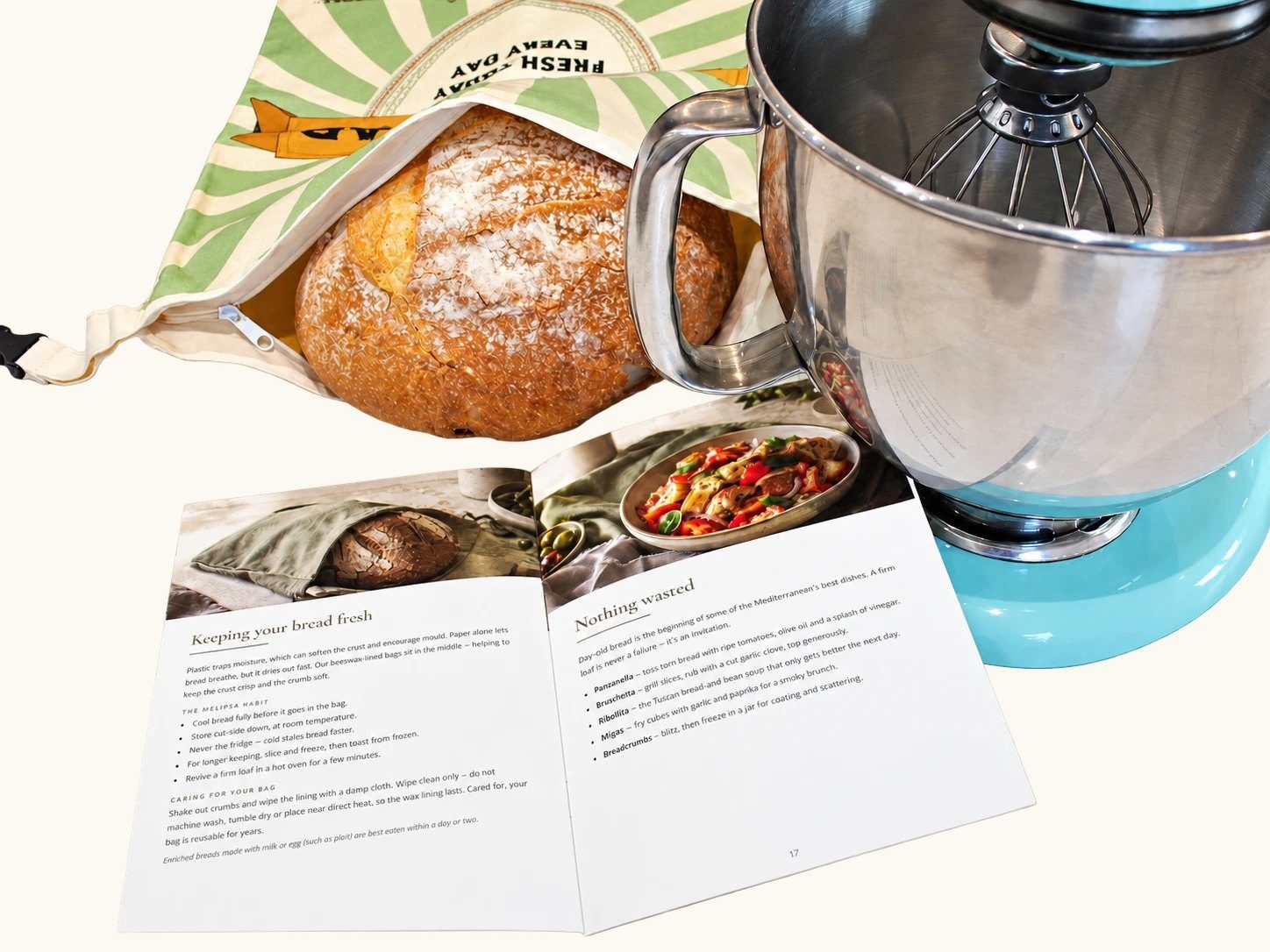
Two bags, a recipe book, one box
The complete Melipsa set — beeswax-lined, generously sized, and boxed ready to give.
Buy on Amazon Secure checkout and delivery handled by Amazon